
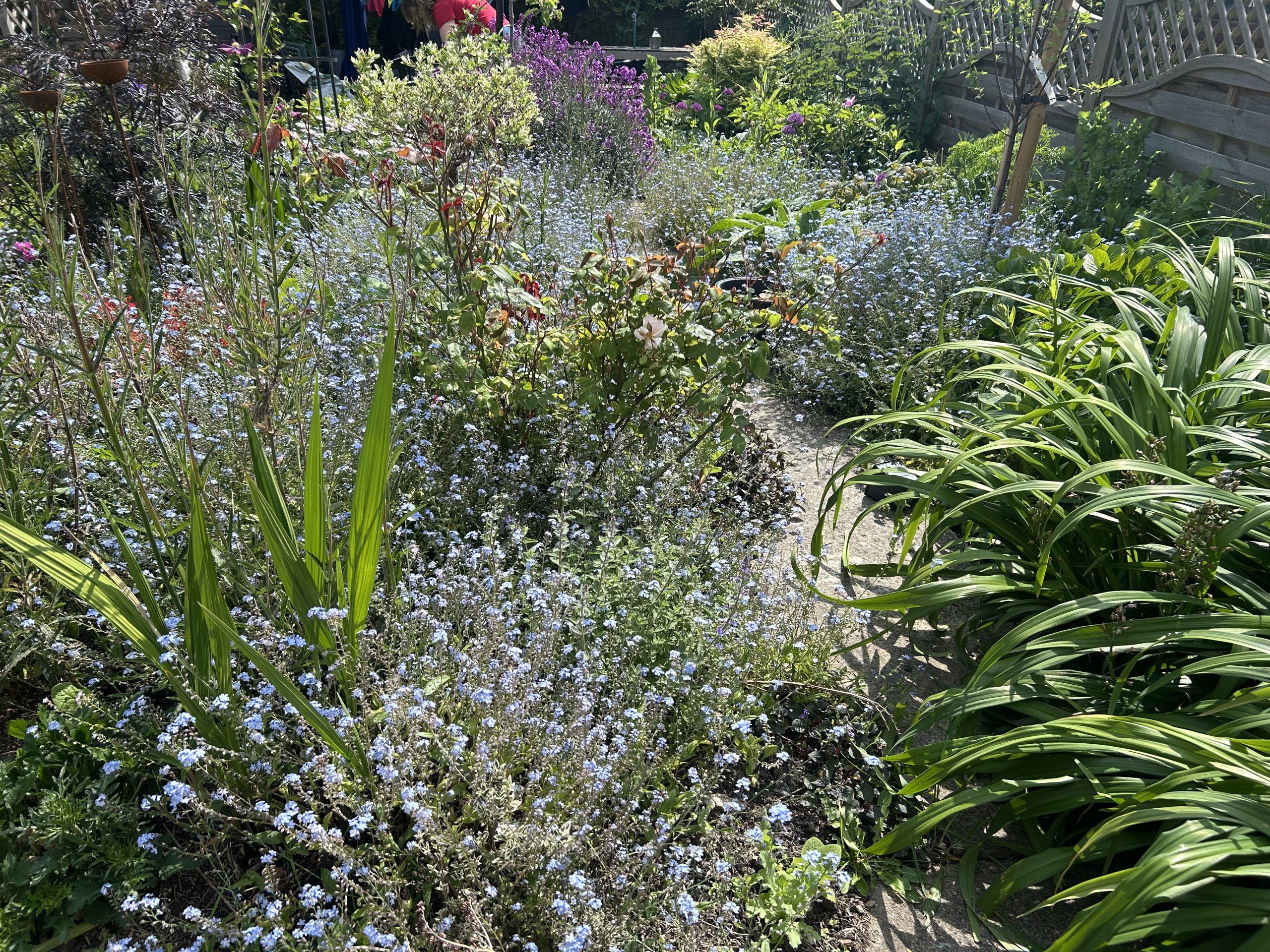
Every day, I take a quick stroll around our garden. It doesn’t take more than a few seconds, to be fair, because it’s a very small garden, as you can see by the photo, but there is something missing and that’s bees.
My partner, who curates this beautiful little area, does so in part to attract bees. We all know the importance of bees within our eco-structure but so far, and we’re well into May now, there are hardly any of them.
Even on a bright sunny day, when you might expect to see it alive with bees, there are barely one or two. And we know why this is.
2024 was the worst year on record for bees and 2026 is not much better, following a wet and mild winter which has decimated populations. Add to the growing catastrophe of climate change, the use of pesticides and habitat loss, bees are facing an uncertain future. 13 species of wild bee have been lost in the UK since 1900, and 35 more are currently at risk of extinction. These are not just figures plucked out of the air. They’re facts. And the evidence is there, in our little garden.
The government’s Climate and Nature Bill will hopefully take steps to improve matters and from the 13th to 19th July 2026, it’s Bees Needs Week, which you can read about here.
I have never seen anything like the absence of bees we are currently experiencing. I’m hoping it might be temporary, I fear it might be permanent, unless we wake up to the terrible damage Man is doing to our world.
Even our incredibly bee-friendly garden is not attracting bees at the moment. And if we aren’t getting them, maybe they aren’t out there at all?
