
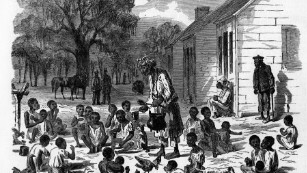
It’s already started, the white anger building up about Swing Low, Sweet Chariot which is sung by the white middle and upper classes at Twickenham. ‘They are trying to ban our song. It’s political correctness gone mad. I’m not racist but. Some of my best friends are black.’ You know the sort of thing. It’s what happens when certain aspects are challenged, like the appropriation of a song written by an African American slave by rugby union fans. But no one is trying to ban anything. It’s called having an adult debate.
I have a hazy recollection from my childhood that this song having something to do with African Americans. Perhaps, and I can’t guarantee this is accurate, I saw it sung by an African American on telly. It doesn’t matter that much, but it’s worth thinking about.
An old RU friend says the song was sung by players who would also made rude gestures, something that sounds about right for rugby union players. With complete innocence too, and not even the slightest thought about whether there was a connection with slavery. Others say it was sung in respect to Martin ‘Chariots’ Offiah, the great rugby league star, in his young rugby union days. Neither explanation concerns me greatly. I just think it’s a crap song, not least because not a single word of it has any relevance to England.
Now that we are gradually waking up to the fact that actually black lives do matter, then what’s wrong with examining aspects of our culture which perhaps we may not fully understand? Why not provide a context to the history of a song like Swing Low, Sweet Chariot so that rugger chaps can make an informed choice when the booze takes hold and they fancy a singalong?
This is not a big deal. Put simply, we are having a long overdue look at some of the cultural symbols of the past and we are talking about them. Let’s not waste time engaging in tabloid-like slogans, pretending that ‘they’, whoever ‘they’ are, want to ban us from being English.
I didn’t condone the criminal actions in removing the statue of Edward Colston from Bristol City Centre, although it should never have come to this. We should have had a grown-up discussion about it years ago, questioning how appropriate it was to effectively celebrate the life of a man who made his fortune through slavery. And if we’d had it, no one would have been tearing down his statue. It would have long been taken down.
Let’s not be angry discussing subjects like this. Let’s be constructive. And let us constructively challenge and discuss all such symbols of a bygone age that might still impact on society today.
