
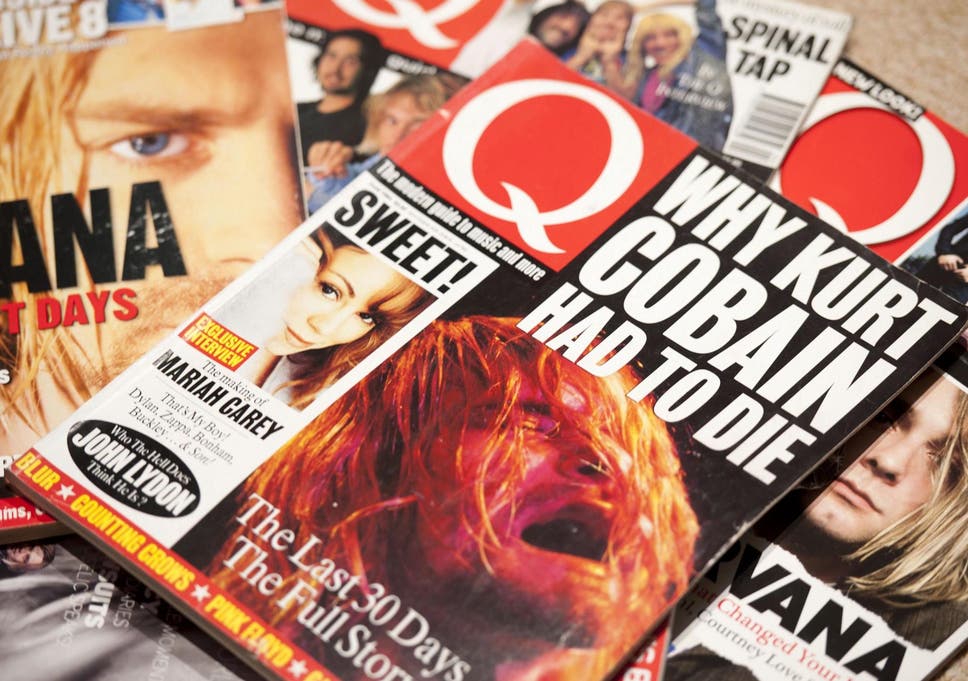
The failure of the music magazine Q will probably not cause more than a minor ripple in the public consciousness. Owned by German media behemoth Bauer, which controls many of Britain’s commercial radio stations like Absolute, Magic and Planet Rock, the magazine was destroyed by COVID-19 and the consequential collapse in its sales. Hardly anyone buys magazines these days in the same way that hardly anyone wants to pay to listen to music. It will not be long before the entire world of print media is dead and not just music magazines.
It’s certainly another hammer blow for the British music scene, given the COVID-19 cancellation of all gigs, the aforementioned lack of record sales for artists and, later this year, the end of the transition deal with the European Union which will be, if Dominic Cummings secures the no deal he wants, a final nail in the coffin for many artists. Things could hardly be worse.
For young bands trying to make their way in music, these must be awful times. There are plenty of internet and streaming sites in order to get their work out there, but no career path. This explains, at least in part, why already wealthy privately educated artists, like Coldplay, James Blunt and Laura Marling are able to sustain their careers when working and even middle class artists are struggling.
If there are few music magazines left to read, where will artists go op show off their wares? Barring the BBC, via Radios 1, 1 extra and 6 Music, the options are limited. Taking Radio 1 out of the frame, the digital only stations have healthy audiences but nowhere near the reach of the big stations. We have a good choice of what I would call heritage outlets but very few who can help develop new talent. This is largely because commercial stations have to make a profit. They make a profit through large audiences who then drive advertising. Why would a commercial station choose to play a virtually unknown act’s latest single when many more listeners would rather listen to the songs they know and love from the past?
I dread to think what the BBC will look like in future when prime minister Dominic Cummings launches his long-awaited assault on the corporation. What Cummings wants – Brexit, a landslide Tory government, the break up up the civil service – Cummings usually gets. A BBC free of the license fee will need to generate money from subscribers, advertisers or both. There will be plenty of room for Queen’s greatest hits but little for Idles in a post BBC world as its radio stations abandon new music to compete with, say, Planet Rock.
I fear that the decline of the music press, the rise of streaming, Brexit and the demise of the BBC will take a sledgehammer to the music world as we know it. For many people, perhaps most of us, this won’t matter a jot, but today’s rising star is tomorrow’s golden oldie. Otherwise, in fifty years time, we’ll still be listening to Whole Lotta Love (nothing wrong with that, by the way) and Bohemian Rhapsody (everything wrong with that).
