
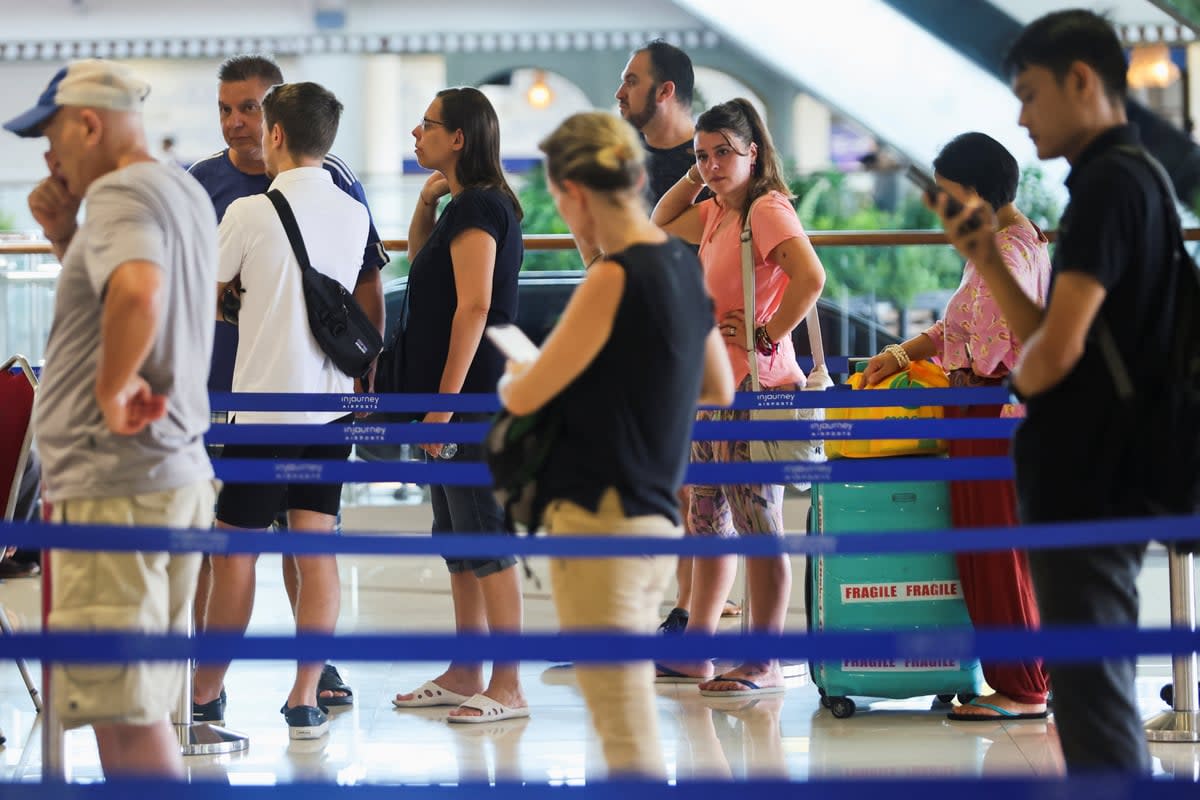
The mainstream media’s obsession with very well off people has continued inexorably with the wider implications of Donald Trump’s war on Iran. As ever, there is always the sad story of a very well-off person going through a terrible time. On the BBC’s website there’s this story, which concerns a number of Brits abroad, including a woman called Andrea Pendrey.
Trust me, I am not taking the piss in this blog. Ms Pendrey is stranded in the Maldives after her and her partner’s holiday flight home was cancelled because of Trump’s war. She has breast cancer and was due to be getting chemotherapy when she got home. But as she can’t get home, she can’t have the chemo. It’s awful for her. At the same time, her partner lost his job just before they flew off on holiday and because of hassle with insurance, they’ve had to shell out £12,000 on extra hotel costs. She is “stressed-out”, adding that, “Even though this place is paradise, we’ve been crying and feel really upset.” She has my full sympathy. But there is a but.
I can see the attraction of going on a fantastically expensive, possibly bucket-list, holiday if you’ve been diagnosed with cancer. Who knows what tomorrow will bring? Maybe it was booked some time ago. Who can blame her from going? With potentially life-saving treatment just down the track, maybe you might want to delay the hospital, if only for a short while? And then your partner loses his job. Do you then still go ahead? Maybe you do. Maybe you just say: “Fuck it. We’ve had a terrible time. Let’s have a few weeks in the sun, away from it all, and get back on the hamster wheel of life when we’re ready.” I get that. I might even do that. I’m not being critical and I am trying not to be judgemental. I am just wondering why grim stories closer to home don’t seem to attract the news outlets.
Every week, for three-and-a-half years, I have volunteered at a food bank. Obviously, each client has and indeed is a story beyond food hunger. I see victims of abuse, drug addicts, people who sleep rough, people with terminal illnesses, people who work but have fallen on hard times; in short, people who rarely visit the other side of town, never mind the other side of the world. Yet the world never sees them because the media isn’t interested and maybe we aren’t either?
There are other sad stories on the page I have highlighted. And they are sad stories, of people being stranded abroad, stuck in places like Sir Lanka and Ko Samui. It’s costing them a fortune, they don’t know when they will be home, nor how they will afford to stay where they are. For these people, it’s a living nightmare. Many of the people I see are not living at all, in any meaningful sense.
I do not blame the stranded Brits abroad for telling their story. They’ve been asked to tell their stories by a voracious media, they’re telling it honestly and genuinely and no one is saying, “Don’t you realise how bad this looks?” Because it does look bad.
My feeling is that there are not many votes in reporting on poverty. The poorest people are, unfortunately, the least likely to vote and that’s the price they pay. We rarely see the stories of those who don’t have a pot to piss in, although I see them every single week of my life.
The affluent holidaymakers “stranded” abroad deserve to get home. I hope it’s sorted soon. The forgotten millions, as far as the media and much of the country, might as well not exist.
I suspect the media class – sorry, I hate that term but I can’t think of a better one at the moment – see themselves as the stranded tourists rather than the homeless person with no food and write about what they know, perhaps assuming that as the press is stuffed full of celebrity tat, like the Beckhams, we’re all suckers for the stranded tourist stories?
I wish the media could cover aspects of all human life and not just lifestyles of the well-to-do. I’d be well hacked-off if I was stuck in the Maldives in ill health, maybe not so if I was well. I’d be even more hacked off if I had been abandoned to live a horrible, deprived and miserable life with no guarantees that it would ever change, especially when half the country either didn’t know I existed, or worse, didn’t care.
