
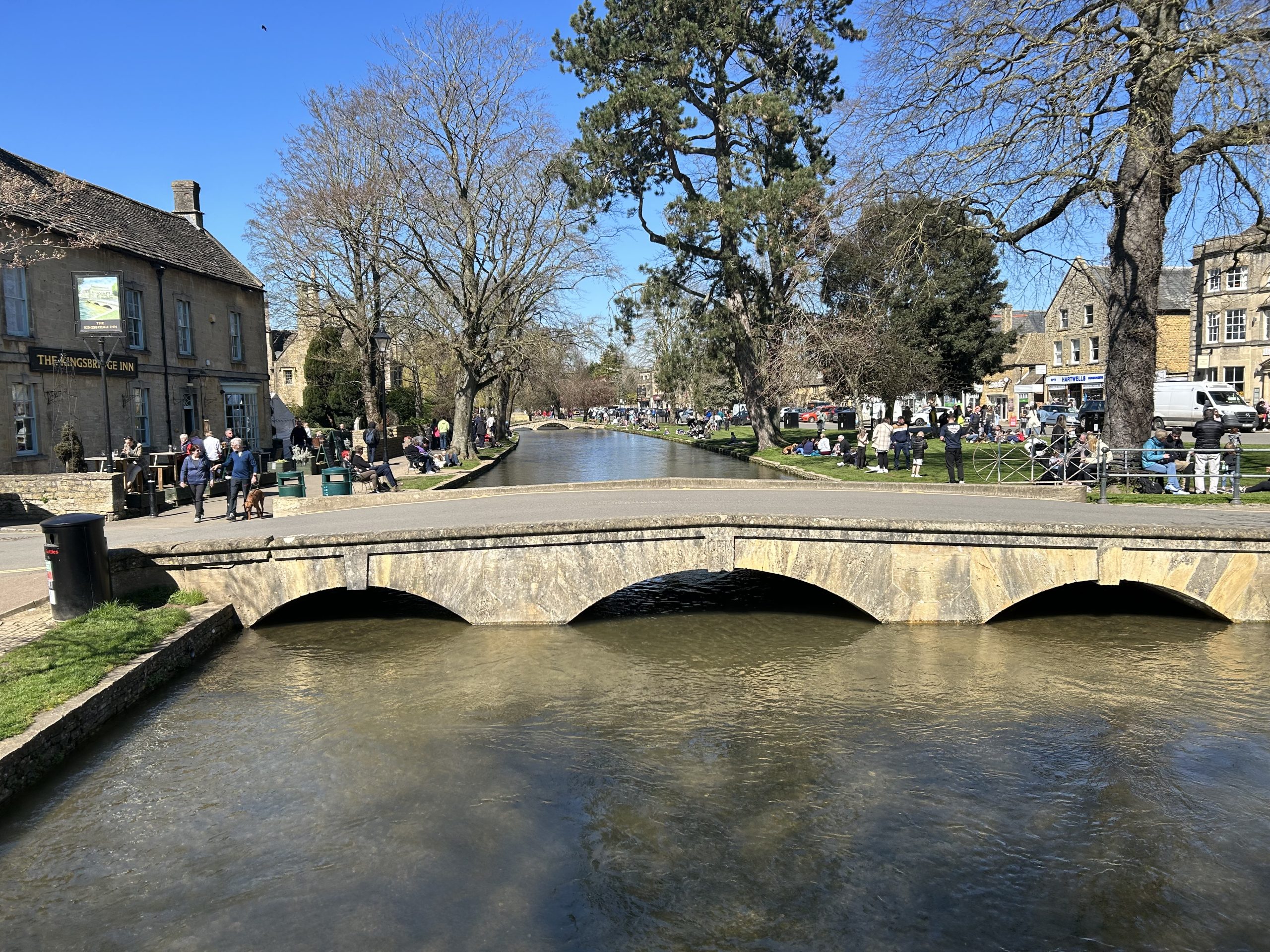
If anything encapsulates the drift from regular Britain to comfortable middle class rural Britain by the otherwise hard left, anti-Labour Guardian newspaper, it’s this opinion piece by ‘Social Policy Editor’ (what a job title) Patrick Butler which is about the “rural food desert” of the Cotswold village of Kempsford. I don’t wish to decry the issues faced by locals who face a three mile drive to the local shops, but just read this excerpt from the article:
“There is no evidence people go hungry in Kempsford, but it illustrates the paradox of rural food deserts: food is often easier to access, cheaper, healthier and more abundant in the most deprived urban neighbourhoods than relatively affluent areas such as the Cotswolds.”
Having been to the Cotswolds on numerous occasions, I am well aware that while the area is “relatively” and, I would suggest in some areas very, affluent, there are undoubtedly areas of poverty. There are areas of poverty nearly everywhere, if you look for it but I take issue with the part that says “food is often easier to access, cheaper, healthier and more abundant in the most deprived urban neighbourhoods than relatively affluent areas such as the Cotswolds” because it only tells a part of the story. There are around 13.4 million people in food poverty in the UK, four million of whom are children. Food is not easier to access when you have nothing to buy it with.
It is true that there are stores which sell stuff much cheaper than the usual Big Supermarket names. I tend to use Aldi for top-up shops because it provides decent value and because I can afford top-up shops. The evidence is that the poorest people in society, the 13.4 million in food poverty among them, do not have access to cheaper and healthier food. On the contrary, their diets are among the worst and unhealthiest imaginable.
The Guardian hack Gaby Hinslif makes reference to the rural aspect in a post on social media where she says that she lives “in a rural area where everyone drives a lot“, one imagines because of the lack of public transport described by Patrick Butler, the implication being that us city dwellers are all well-served by public transport. As if. Come to Bristol and let me show you something to make you change your mind.
Where I live, we are well-served by public transport, assuming your journey is into town. If you need to criss-cross across the city, as many if not most people need to do, it’s a rather different story. Unless you have the whole day to spare, in Bristol you drive. Or, if you are a poor person, you don’t go anywhere. In other words, the idea that us city dwellers all have it so good because of the supermarkets and public transport is for the birds.
This should not be a petty squabble between the affluent village towns in well-off places like the Cotswolds and deprived inner city areas. I live in an ex local authority home in an old local authority estate and I would be lying if I was to say I wouldn’t want to live in the rural idyll of one of the picture-postcard Cotswold villages like Kempsford but given that the average house price in the town is around £500,000, I recognise that this is unlikely to happen. But if I did choose to live there thanks to an unlikely cash windfall, I would have to accept that in a society where market forces dominate, local services in such a place would be somewhat sparse, if not non-existent.
The final two paragraphs of the Guardian story are fascinating:
“Cotswold district councillor Tristan Wilkinson says the rural-idyll-on-steroids image that has drawn celebrity and wealth to the area can make it hard to convince policymakers it has pressing social needs. He calls for an “infrastructure first” approach to new development, prioritising shops and transport as well as new housing.
“It’s not just about access to food but a range of essential services, like job centres, childcare and health, he says. As fuel prices rocket, even the car-owning middle class is feeling the strain. At times, he says, it seems “we are being penalised for living in a rural community”.”
This is all true, but it’s also relative. The car-owning, and non car-owning working classes are feeling the strain even more and it is beyond tin-eared to suggest that “essential services like job centres, childcare and health” are freely available and accessible to people in poorer inner-city areas. Geographically, it’s true that city dwellers are closer to services and shops and all the rest of it, but closer is all it is. Live in some areas and all you have is a local shop which charges vastly more for essential items than a supermarket. The difference, it seems to me, is that thanks to the middle class media, middle class people have more of a voice whereas the dispossessed have no voice at all.
The Guardian is, or perhaps was, one of the few media outlets to empathise and sympathise with the many “have nots” in the country. I have no issue with them pointing out issues for mainly middle class people in middle class areas, but I cannot but think that the people who sit in our food bank every week, waiting for an emergency parcel of food, have more pressing issues. The councillor mentioned above may wish to consider the possibility that the poor are being penalised for living in an inner city community. As I said before, it doesn’t matter how cheap something is if you haven’t got anything at all.
