
Nothing makes you feel more ancient than looking back on a particular period of history, remembering it vividly and then finding out just how long ago it all was. That’s just happened to me, big time.
On 5th May 1980, I was home alone watching snooker on the telly. I have absolutely no idea who was playing and even less idea why I was watching because I am not a huge snooker fan. Perhaps it was the final, or something? Either way, the BBC interrupted the snooker with a ‘NEWS FLASH’, which is what we used to call ‘BREAKING NEWS’.
Several days before, six armed men stormed the Iranian embassy in South Kensington, London, holding 26 people hostage, including embassy staff, several visitors, and a police officer who had been guarding the embassy. They demanded the release of prisoners in Khuzestan and their own safe passage out of the United Kingdom. The government basically told them to go forth and multiply. A siege and a stand-off ensued until the evening of 5th May, when the SAS launched an assault to end the siege, killing five of the hostage-takers and apprehending the sixth, who ended up being banged-up for life. It was all very exciting, not least because we were able to watch the whole thing like on telly, with added commentary.
We didn’t actually see any of the shooting from inside the building. But we saw the SAS moving outside the building and lobbing grenades in through the window. It was all over very quickly, but the event is lodged in my mind, as if it happened yesterday. But it wasn’t yesterday. It happened 46 years ago today.
I had little idea who or what the SAS was. I knew they were an elite squad of soldiers who did extraordinary things in secret. Yet here they were doing their thing on live TV for an audience of millions. Everyone knew who they were after that.
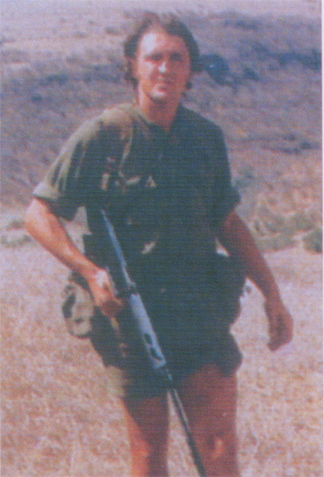
Around the turn of the new millennium, I was a humble civil servant working on benefit fraud (investigating rather than committing it) and the Labour government decided that it might be a good idea if we were trained by professionals in the field of covert investigations, such as surveillance, obtaining video footage of fraudsters at work and generally being a lot more professional. We found ourselves being trained not by in-house trainers but by experts form the field, including ex police officers, including from Special Branch, MI5 and the Special Forces. We received training from two ex SAS soldiers, one of whom had served in Northern Ireland, the Battle of Mirbat in Oman, the Falklands War and … the Iranian siege. Pete Winner, a pseudonym, was a member of the regiment who became a TV star, sort of, back in the day. And there he was, teaching little old me the basic techniques that would make me a better investigator.
Unfortunately, we did not get the chance to fire a few guns – this is not a skill that was used in our jobs, sadly – but we did manage to get him to talk about his life in the services. I was, and remain, in awe. I even bought his book, Soldier I, which he kindly signed for me and stands, proudly, on my bookshelf. You would never have guessed he was a former SAS officer, but then apparently you never do with these guys. They just look like ordinary blokes, which I suppose is one reason why they remain so anonymous, even after taking part in an operation that the whole world saw on the crystal bucket.
It felt like being coached how to play football by Lionel Messi or to act by Michael Sheen. If you didn’t learn from the best, you would never learn anything from anyone.
I felt very lucky and indeed honoured to have met, never mind being trained by, Pete Winner who to all intents and purposes is a national hero. I really liked him a lot, even if I knew deep down that he could probably rip my head off if he felt that way! As it was, he was a great teacher and a constant reminder of one of Britain’s finest military moments, the Iranian Embassy Siege of 1980.
