
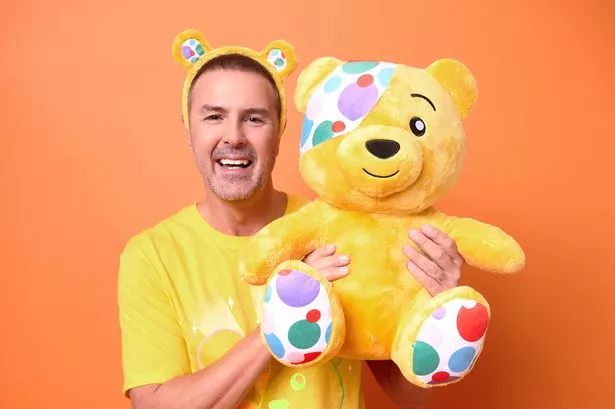
Tonight is the night when we hear the words I most dread: “And now on BBC 1, it’s Children In Need.” Not that I watch that much on a Friday night, aside from the occasional Have I Got News For You and the enduringly excellent Graham Norton Show. If I’m not something we’ve recorded or maybe a series on Netflix, I might dip in and out of the channels if I have too much time on my hands but Children In Need is, frankly, something I could live without.
The premise of the show is that ‘celebrities’ get together to raise money to help … wait for it … children in need. Now I am not against the idea of helping children who are in need because there are millions of children who are in need and shouldn’t or needn’t be. So a charity, like Children In Need, comes along to make those needs a little less. But I am, and have always been, uncomfortable with leaving the welfare of people in general and in this instance children in particular in the hands of a well-meaning charity.
For example, professional northerner Paddy McGuinness has done a long bicycle ride for the charity, raising over a million quid to help children up and down the land. Click here to see how Children In Need helps people where you live. Fair play to McGuinness because whatever you think of him and the charity – and I quite like the bloke – I’m thinking that without his efforts and those of numerous other well meaning folk, thousands of children’s lives would be even worse than they are now. But here’s the thing that always gets me. Why do charities have to do these things? Why not the state?
Well, the answer is that charities exist to pay for things that we the people deem not important enough to fund through taxation. Here’s a short list of things that Children In Need helps fund that we the people don’t care enough about to demand that our government should take care of:
- Independent living for disabled people
- Guide dogs for the blind
- Off The Record
- Specialised activities for children and young people with life-limiting or life-threatening heart conditions
Okay, the pot of taxpayers’ money is not bottomless but my God, I look at these small examples and I don’t think to myself, what a wonderful world. Children in need and dependent on the generosity of strangers. If we don’t donate, disabled people can’t live independently, blind people have to hope they don’t end up under a bus, mentally ill children can stay mentally ill (full disclosure: I used Off The Record a great deal in my mental teenage years and I am not sure if I would be here today without them) and children and young people with life-limiting and life-threatening heart conditions – well , nothing could persuade me to make cheap jokes about that.
Children In Need is but a very public example of how we in Britain have come to regard as charities as being the organisations to deliver what many of us would see as vital public services. Just look at our ex service personnel who are heavily dependent on charities like the Royal British Legion and Help for Heroes. I have always thought that was a strange one given how occasions like Remembrance are seen as so important to us all, but not important enough to insist the state cares for those who fought and died for us.
So tonight, celebrities will do silly things or endurance events to raise money for children. Maybe we will shed a tear when the BBC shows us deeply moving and sometimes upsetting clips in between the cast of Casualty doing a sing and dance routine. Fair play to the celebrities and the ordinary folk who do good things solely because they want to help. Many of us do the same thing, albeit not under the bright lights of the media.
There’s a place for charity, I’m afraid, but there’s surely also a balance to be drawn. What is a vital public service and what is an extra? My view is that we’ve crossed the line and too many people, and in this case children, rely on the random kindness of strangers.
However, it’s very likely I shall be watching or preferably doing something else.
