
It’s the UEFA Champions League (UCL) Final today. A much-awaited clash between Kroenke Sports and Entertainment and Qatar Sports Investments and Arctos Partners, a kind of Dagenham and Redbridge partnership, I would assume. You may know the ‘clubs’ as Arsenal and Paris Saint-Germain. As the old saying goes, I have no dog in this fight.
I grew up in times when the UCL was called the European Cup and was competed for – and here’s a revelation for you youngsters – by the champions of each European league. Nowadays, the term Champions League is a bit of a misnomer, with Liverpool, having had their worst Premier League season in donkey’s years, qualifying for next year’s tournament in fifth place. But hey, it’s incredibly lucrative for UEFA and of course the already filthy rich elite clubs of Europe, so that’s all right, then.
The first final I remember was in 1967 when Celtic defeated Inter Milan in Lisbon. Celtic, from Scotland, winning the biggest club tournament in Europe and arguably the world. The Lisbon Lions, as they became known, comprised of 11 home grown players, all of whom had been born within 30 miles of Celtic Park. As no English team had won the trophy before, naturally Celtic became the first British team to win it. The following year, enjoying ‘home’ advantage (Wembley), Manchester United became the first English team to win the trophy. The English-dominated media could forget all about Celtic’s great achievement from now on.
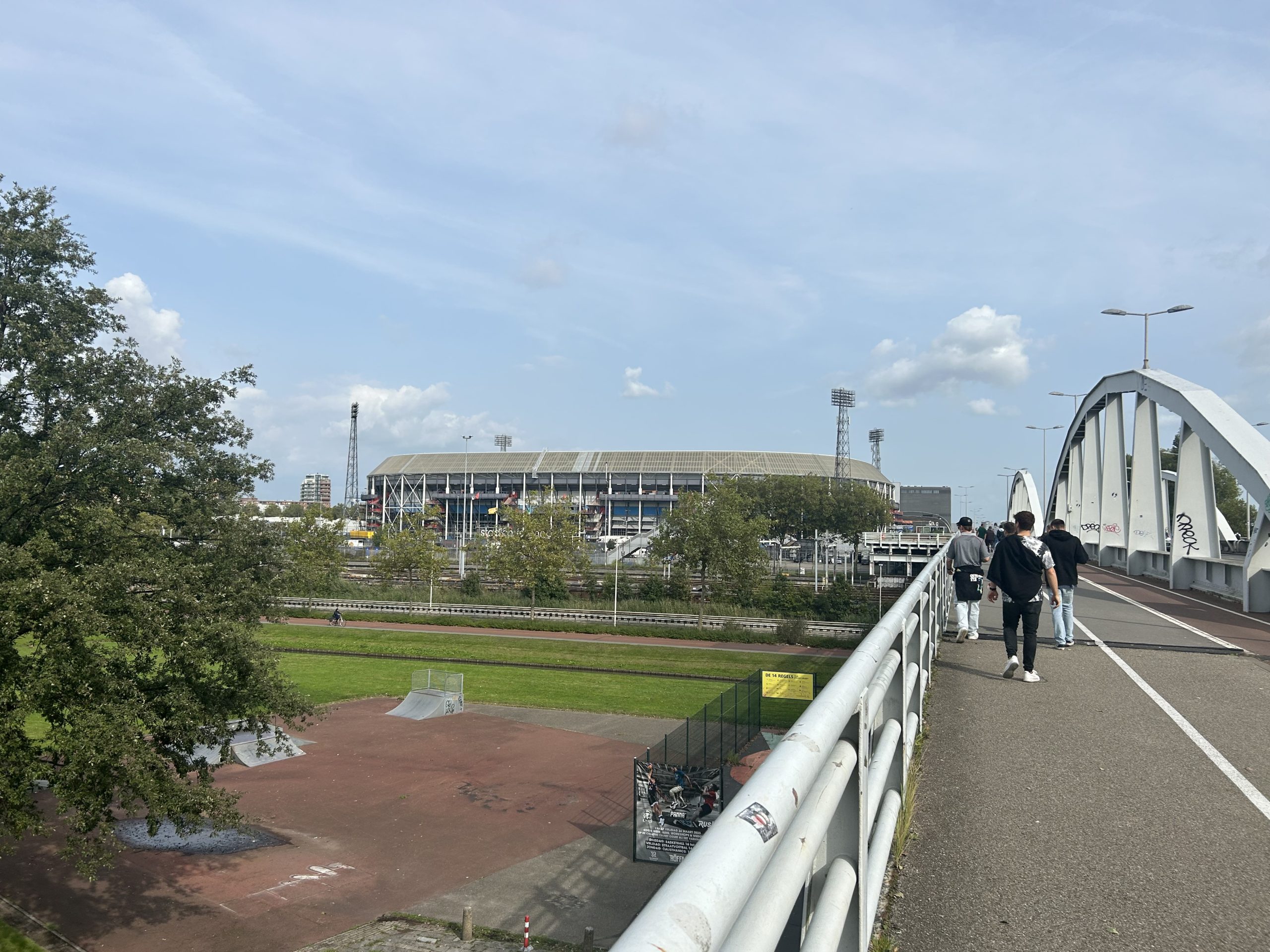
Celtic reached another final in 1970, but this time I didn’t want them to win. They were playing my team, Feyenoord, from Rotterdam, the land of my mother(s). A few months after Celtic won, my mum took me to Rotterdam and I was photographed with the European Cup itself in a small pop-up shop on the Coolsingel (street). (Unfortunately, the photo was lost during my messy divorce in 1990.) During that visit, my uncle took me to my first ever football match, Feyenoord v FC Utrecht and almost the entire Cup winning team were there. I was hooked for life. In terms of European Cup action, that was as good as it got for Feyenoord and Celtic. In 1992, a rebranded and expanded UEFA Champions League was launched to include clubs who were not champions of their own leagues.
Since then, the rich clubs have become even richer and the pool of clubs capable of winning the UCL has become much smaller. As a result of this and as a result of other trends in football, almost always driven by money, smaller leagues do not produce teams capable of competing in the UCL. Legendary names from the past, like Celtic and Feyenoord, do well to just qualify these days and realistically have no chance of winning the trophy or even making the latter knock out stages. There is zero chance of a repeat of the 1970 final between Feyenoord and Celtic, both of whom were stacked with home grown players. Today, the big clubs simply buy up the best of the international talent and the smaller leagues are, effectively, managing on relative scraps. European football was never a level playing field, although smaller clubs could succeed. Those days are long over.
Which is where we end up with today’s final. PSG are probably the only club in France who can compete at the top level, being effectively a state run club. Barcelona and Real Madrid are the sole Spanish contenders for the UCL, perhaps only Bayern Munich in Germany (although Borussia Dortmund did make the final in 2024) and Inter Milan from Serie A. Meanwhile, England, awash with Premier League money, can boast perhaps four or five clubs who can seriously compete. Arsenal are one of that number, hence their arrival in Budapest tonight.
Liking neither club, there is no reason for me to watch the game, other than wanting one team to lose more than the other and that’s hardly a decent state of mind.
In any event, I do not see so-called English clubs as being representative of English football per se. Most are overseas owned, with a majority of overseas players (Liverpool regularly started with no English players in many games this season). For me, the English entries are representative of the Premier League and that’s a very different thing. That will not bother Arsenal or PSG fans one jot.
The UCL represents the football world we live in and not one I would like it to be and I suspect I am in a minority when it comes down to it. Millions will doubtless tune into TNT sports at home or in the pub, cheering on the ‘English’ club. We’ve always done that, right back to the days when clubs were actually English. For reasons, probably irrational reasons, already stated, I will find something else to do from 5.00pm onwards, although I may check my phone for details of the inevitable penalty shoot out (Arsenal to win 4-3).
It’s the European Champions League. Not as we knew it in the days when champions were actually champions. The massive clubs of the past, like Feyenoord, Celtic, Benfica, Malmo and Steaua București, no longer dare to dream of glory in the biggest European trophy of them all. And when dreams take flight, what’s left?
