
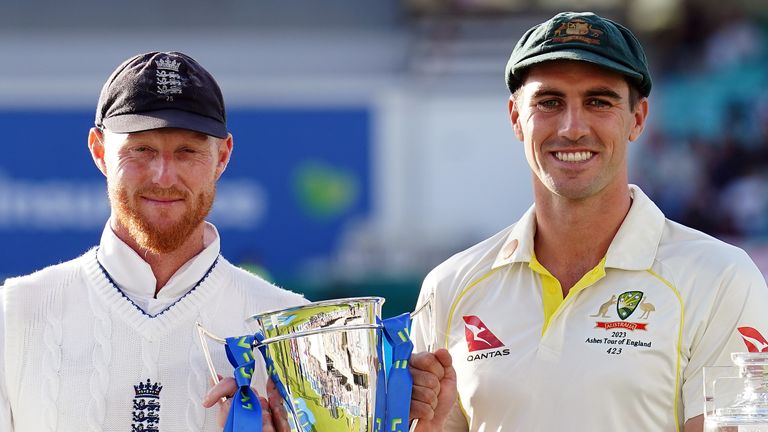
The news that the pay channel TNT has secured the TV rights to the Ashes series between Australia and England, beginning later this year, will have gladdened the hearts of well-off cricket fanatics and insomniacs, who may or may not be the same people. Sky, which has a near monopoly on home cricket, apparently declined to bid for this series, preferring to concentrate its resources on football because obviously there’s just not enough football on telly as it is. Before anyone complains that, yet again, there will be no live coverage on terrestrial TV of this the greatest of all cricketing rivalries, let’s remind ourselves that there never really was. Even in the old days, before 2005 when test matches were on Channel 4 and before that the BBC, overseas tours were barely covered. A pay TV broadcaster is actually providing something extra.
I am more exercised by the fact that all major cricket in England, apart from The Hundred, is not on terrestrial, free-to-air television. We have just witnessed – well, some of us have – one of the great test series between England and India, which ended 2-2 after a sensational final day in the fifth game of the series. But here’s the thing: the viewing figures are tiny compared to the numbers the BBC and C4 used to attract.
Cricket rakes in millions of pounds from Sky and now TNT and the suits will tell you substantial amounts are invested in so-called ‘grassroots cricket’, but here’s an awkward fact. Not only are viewing figures far lower since cricket’s move to pay TV, participation levels are in freefall. In 2016, 364,600 played the game, falling to to 229,100 in 2021. In 2024, it was calculated that just 7% of children play cricket. It is, of course, not just because cricket is no longer accessible to people via television, although it can’t help, that is causing the collapse in participation. Fewer working class and even middle class children play cricket because their schools, for one reason or another, don’t play it either. Inaccessibility and cost are factors, too. But if anyone thinks that a situation whereby the current England team started the last test match with nine players who went to private schools is healthy, then I cannot agree with them.
Kids need role models. And in cricket, they have them or rather should have them, if only they had access to them. James Anderson was the greatest fast bowler of all time, yet outside cricket he is barely known. Joe Root is the greatest English batsman of all time, yet his exposure to the vast majority of the public is minimal. Even the captain, Ben Stokes, could probably walk down any high street and not be recognised by anyone other than serious cricket fans. Given that these three superstars made their way through what remains of the state system and not elite private schools, you’d think their pictures might be on every young boy’s wall, but they won’t be because they are not well known outside of what is an increasingly small cricket world.
I am lucky to be in the position whereby I can watch the Ashes on TNT, although I am more likely to watch the highlights than stay up all night. I hope, at the very least, the powers-that-be ensure that the BBC, via Test Match Special, are able to provide their excellent radio coverage and not, as the rugger chaps allowed with the British and Irish Lions, to flog it off to the Murdoch-owned shit show that is Talk Sport. At least that will be something.
It’s probably fair to say that I am old fashioned. I like the idea of cricket being free-to-air and to enjoy the widest and most diverse audience possible and if that means the authorities taking a financial hit in order to ensure it happens with at least some games, then it should happen. It is one thing the English Cricket Board investing Sky money in the grassroots, but quite another if there is no one left to play and watch it.
