
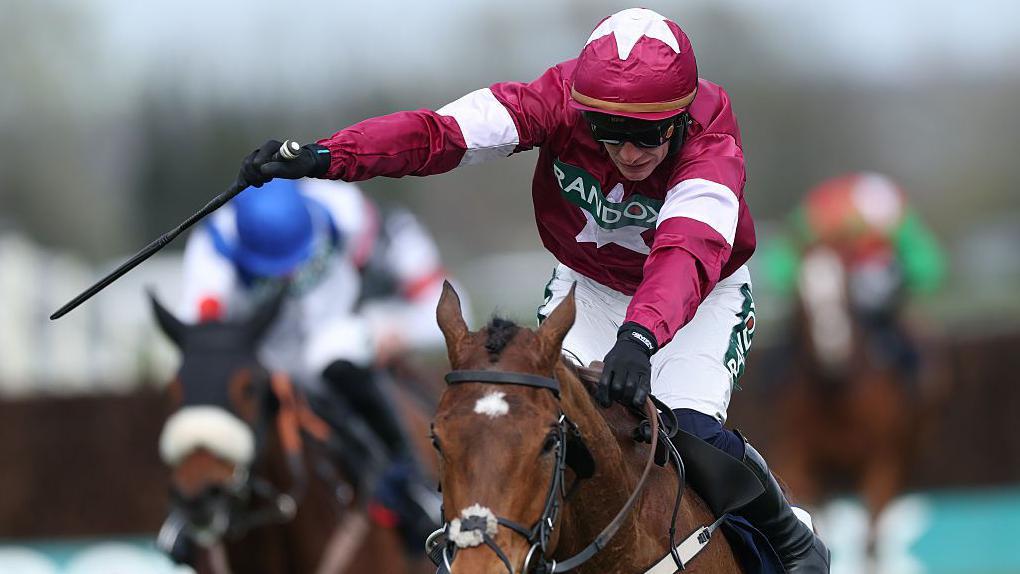
“He’s been put down. He broke his back. It’s terribly sad for the horse,” said the owners of Gold Dancer, who had just won the Mildmay Novices’ Chase on day two of the Grand National Meeting at Aintree. Terribly sad, indeed. Just imagine being a horse, dragging your legs through the last fence of the race, breaking your back but still having the will-to-win to cross the line in first place, before vets could quickly erect fences around you before putting a bullet to your brain. Great stuff. Aintree: the pinnacle of jump-racing.
So far, then, just the one horse has died at this year’s Grand National meeting so I suppose we should be celebrating. Gold Dancer is only the fourth horse to die so far this month across all of the UK, compared with 15 in March. It should be pointed out that last month’s figures could have been inflated by the four deaths at everyone’s favourite Horse Death Event, otherwise known as the Cheltenham Festival.
Aintree goes on unabated. I switch on ITV, which shows the festival, and the first thing I see is a smartly dressed woman wearing what appears to be a gownless evening strap interviewing a group of young women in bright dresses in silly hats. It’s trebles all round for the crowd as people forget Gold Dancer’s “terribly sad” news. At least his corpse will be put to good use, perhaps by way of becoming pet food or fertiliser. Always look on the bright side, eh?
Still, it’s sport, isn’t it? Sport in which the main protagonist, the horse, has no idea they are competing against other horses. Most horses survive dying in horse racing but it’s a matter of fact that 3155 horses have died on UK courses on the 6969 days since records were kept from 2007.
Let’s hope no more horses die at Aintree and everywhere else for that matter. They will do, though. It’s terribly sad, but not so terribly sad that we have to ban it. They’re only horses …
