
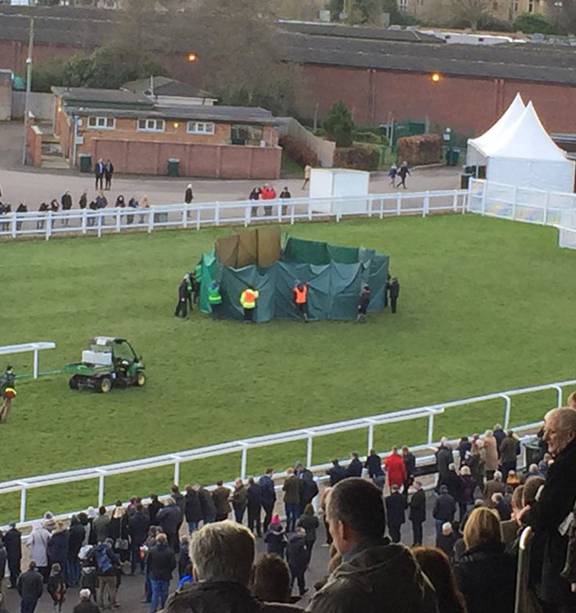
Putting forward the view that horse racing is cruel and should be made safer, if not banned, invites justified claims of hypocrisy when that critic, me in this case, eats dead animals and products derived from animals on a regular basis, leaving me somewhat stranded between both moral high and low ground. Indeed, the organisation Animal Aid, which campaigns peacefully against horse racing, is unashamedly vegan in outlook, something I am palpably not. While I am not yet ready to join the world of enjoying a strict vegan diet, Animal Aid probably has better principles than I do. At least when it comes to horse racing, I am totally on their side.
Since 1815, it says here, the Cheltenham Festival has dominated the racing calendar and is described by the Jockey Club as follows: ‘Cheltenham Festival 2024 is the pinnacle event of the jump-racing calendar, this year will be bigger than ever as we celebrate 100 years of the Gold Cup across the week. Guaranteed excellence, whether you join on Champion Day on Tuesday, Style Wednesday, St Patrick’s Day on Thursday or Gold Cup Day on Friday. Each day offers a unique twist on four days of extraordinary.’ What is not to love about that? ‘Four days of extraordinary.’ How about the number of horse deaths that occur at Cheltenham racecourse?
Since 2000, 74 horses have died at the Festival. It’s a much higher figure than that for Cheltenham if you include fatalities at other meetings at the course. I’m sure someone in the racing world will criticise that statistic by saying something like, “If you put it like that, it sounds bad, but bear in mind that’s over 17 years ..” and they would be right. Looking at that way, it’s ‘only’ just over seven horse deaths a year. Nothing really, unless you’re one of those horses. And, put in context of the number of horses that have died, it’s basically nothing when compared to the number of horse racing fatalities across Britain. Nothing, as in 2761 deaths in the last 6210 days.
Horse racing is a unique sport in that its main participants have no idea they are racing and what they are racing for. The prize pots won’t be theirs, the winning bets won’t be theirs, but the man with a gun behind the big green tent could be if they misjudge a fence and break something or it’s just too much for their bodies to take. When the Guinness tents have emptied and the cheers have died down, doubtless the carcases of some of these beautiful animals will be on their way to the Knackers Yard.
I have never felt the desire to go to the races, so I will never feel the buzz people presumably get. And even if I did, I’d spend every race fretting about horses getting injured and put down before my eyes. In fact, I’d be so worried, I’d got to a nearby fast food van to buy a quarter pound beef burger with bacon. There’s consistency for you. “Onions, Sir?”
I wonder if we would go to any other sporting event where the fatality rate of its contestants was so high? We would see a Formula 1 racing driver killed every three races, as well as scores of football and rugby deaths every single day. That would make post match interviews a little awkward. “Apart from the death of the centre forward and left back, that was a very useful three points,” wouldn’t be a great selling point, but maybe TV and radio would do what they do with horse racing: ignore the deaths and pretend they never happened.
Let’s hope no horses die at Cheltenham this week, but if there are deaths you can watch them exclusively on ITV. As Martin Tyler might have said, “And it’s live.” Or maybe dead?
