
Writing as someone who has zero interest in taking part in so-called Dry January – I think the alcohol industry, especially pubs, is in enough bother as it is – I nonetheless decided, against my better judgement to read the freelance writer Joanne Gould’s Guardian article about the low alcohol and alcohol-free drinks she likes best. I am not, in principle, opposed to the idea of alcohol-free booze, but I have not yet tasted a single low alcohol or alcohol-free drink that I found even vaguely acceptable. Through diligent research, Ms Gould tasted 75 of these drinks and has come up with her favourites. For reasons that will soon become clear, it is unlikely I shall be trying any.
For one thing, I find the very idea of drinking, say, alcohol-free beer as being absurd. The whole point of drinking a pint of foaming ale or an ice cold lager is the kick you get from the alcohol. Oh, and that many of them taste so bloody good. In fact, I would find it hard to better a pint of Ruddles County, Tanglefoot or Exmoor Gold. Anything, even most other beers, don’t come anywhere near tasting that good. I have tried numerous alcohol free beers and they are uniformly terrible. If I am going without booze, it is not my first thought to start consuming something inferior which supposedly tastes just like the real thing. By the same token, I never understand vegetarians choosing to eat fake burgers or bacon. There are countless examples of decent food that is not based on traditional dead animal products. Why imitate?
Ms Gould begins with her favourite low alcohol wine. It’s called Moderato merlot-tannat cuvee revolutionnaire and comes in at a tiny 0.5%. Hmm, I thought. Maybe I can give that a go? “A decent food wine with rich casseroles and warming tagines, or enjoyed alone,” she reports. And the price? Why, a mere snip at £13.
Now I know that wine is not cheap these days. I would not pretend to be a connoisseur and I freely accept that you cannot buy a decent bottle of wine for under around £8. Just about anything under £8 is likely to be firewater, the absolute dregs from the vineyard, a drink so bad that only a desperate alcoholic would even look at it. Of that £8, around half goes to the chancellor of the exchequer by way of duty and VAT, the rest includes money to retailers, packaging, logistics and transport and margins for the retailer and producer. The cost of the wine itself can be mere pennies with the cheap supermarket plonk. The more you, the better quality of wine you will be drinking. £13 for a bottle of wine that contains next to no alcohol suggests either a massive mark up by the retailer, that it’s hugely expensive to produce or that it’s a rip-off. If I paid that much for wine, I’d probably want it to have some damaging effect on me.
Ms Gould tried spirits, too, and her favourite gin is Cygnet Infinity, a brand co-founded by the well known gin expert and popular singer Katherine Jenkins. “The overall taste is honey-led with delicate florals and berries; deliciously light and botanical,” enthuses the writer, “and definitely nothing like a gin.” Apparently, though, it does have “lion’s mane and Siberian ginseng, along with manuka honey” in it. So, that’s all right, then. At £32, I’d at the very least want my pretend gin to taste like gin.
The list goes on. Sparkling wine (£19.99), The Pathfinder hemp and root non-alcoholic spirit (£34.99), Alcohol-free tequila-style spirit (only £21.57, founded by – and I am not making this up – Lewis Hamilton) and Chance Cider, which comes in at £34.85 for 12 small bottles. Give up booze and spend more money. That’s not quite what I had in mind.
Eventually, I am sure manufacturers will come up with low and alcohol free drinks that can compete with their alcoholic rivals, in terms of both taste and quality. They’re not quite there yet though.
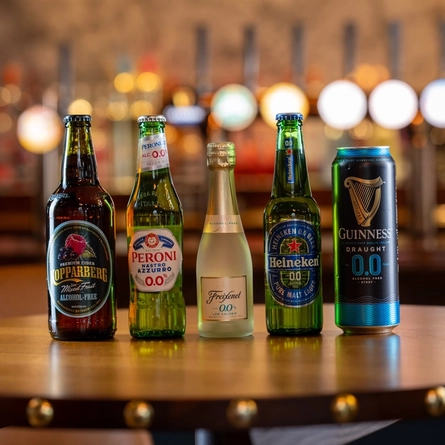
The only pretend alcohol I briefly liked was the Guinness 0.0, “non alcoholic beer with our iconic taste“, goes the blurb. “The Guinness with everything except the alcohol,” it continues. It does taste like Guinness but despite the “everything“, the absence of alcohol renders it just another unfavourable imitation of the real thing. Could do better, Arthur.
Clearly, drinking less alcohol is desirable, if not essential, so that’s what I am doing instead of drinking the fake stuff. You may not live longer without the real thing, but it will certainly feel like it.
